
Back to School, Baby: But Are Our Children Ready to Learn?
By Dr. Saliha Nelson · A reflection from Education on the Edge.
The first bell rings. The doors open. Backpacks stream past the front office. On paper, the school day has begun.
But being at school is not the same as being ready to learn. Every child who walks through the doors has already lived a whole morning — a rushed breakfast, a tangled commute, a hard goodbye, a big feeling. Some carry excitement. Some carry worry. Some carry both. And every one of those feelings shows up in the classroom whether we plan for it or not.
The morning arrives with the child
Stress does not politely wait outside the school building. When a child feels rushed or anxious, four things can quietly slow down: attention, working memory, impulse control, and flexible thinking. These are the very tools the school day asks a child to use in the first ten minutes.
Ask any teacher what those first ten minutes look like on a hectic morning. A directive is repeated three times. A pencil is dropped, then dropped again. A small correction lands harder than usual. It is not defiance. It is a nervous system that has not yet had a chance to settle.
Are our schools ready to receive children when they arrive?
We often ask whether children are ready for school. It is worth turning the question around. Are our schools ready to receive children the way they actually arrive — sometimes bright and bouncy, sometimes tired, sometimes carrying the weight of a hard morning?
The most powerful transition into learning is rarely an academic demand. It is a moment of belonging. A greeting by name. A predictable rhythm. A signal to the body and brain that says: you are safe here, you are seen here, we are ready for you.
Five intentional transitions
None of these require a new curriculum or a new budget. They ask only that we design the first minutes of the day with the same care we design the rest of it.
- Personal greetings. A teacher, a counselor, a principal — someone who knows the child — at the door or in the hallway. Names spoken. Eye contact. A pattern the child can count on.
- Movement. Two minutes of stretching, a walk-and-talk to homeroom, a class-wide movement break. The body signals the brain that it is time to focus.
- Music. Something familiar, something calming, something the class chose. Music regulates mood in a way words often cannot.
- Quiet choice. A short window where a child can pick between reading, sketching, journaling, or simply sitting. Choice restores a sense of control.
- Morning meeting. A brief circle where students hear from one another and from the adult in the room. Connection before content.
Home rhythms matter too
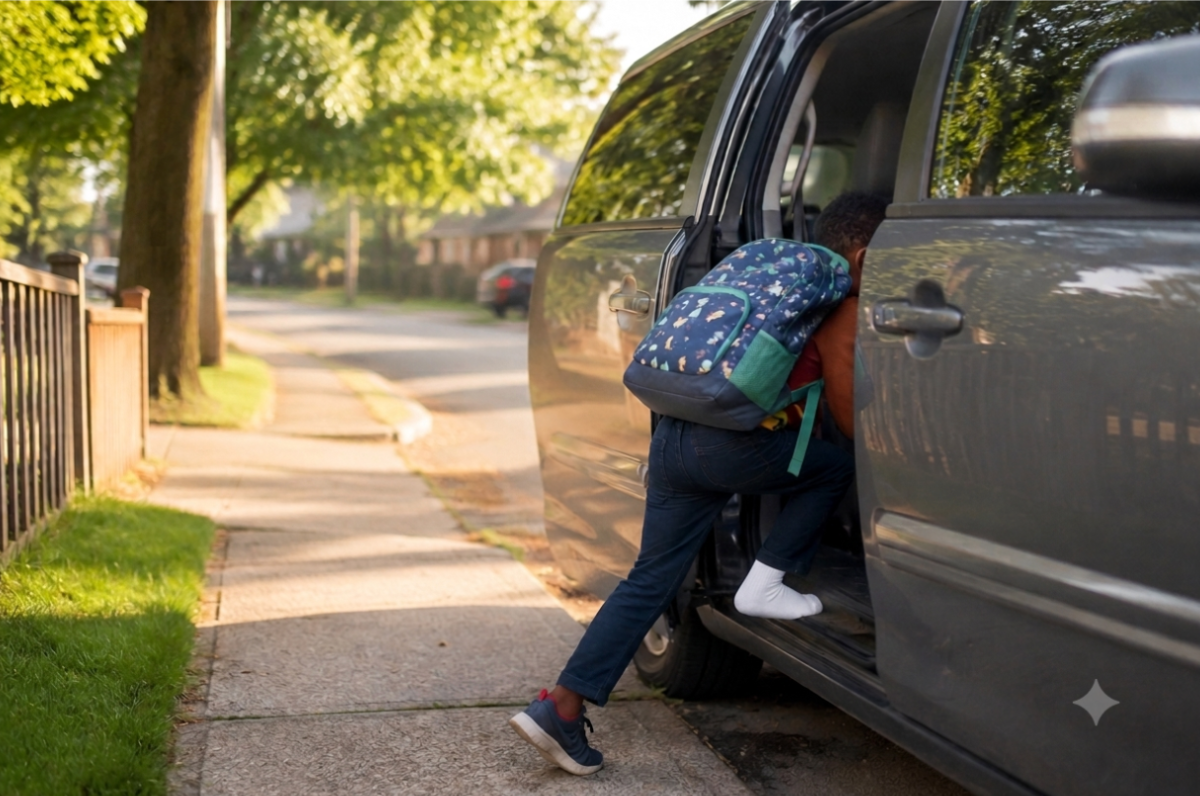
Families carry half of the morning. A hectic commute, a lost shoe, a missed bus, a hard conversation — these ride into the classroom with the child. The steadier the morning at home, the steadier the arrival at school.
One predictable routine is worth more than a perfect one. A short list, the same order, most days. A five-minute buffer for the unexpected. A closing phrase that becomes a family signature: have a good day, come back and tell me one thing.
Join the conversation
Should the school day begin with an academic demand, or with an intentional transition? Parents, educators, and school leaders are all part of that answer. Share what is working in your school, in your home, in your community. The stories we tell each other about the first minutes of the day shape what the rest of the day can become.
— Dr. Saliha Nelson