
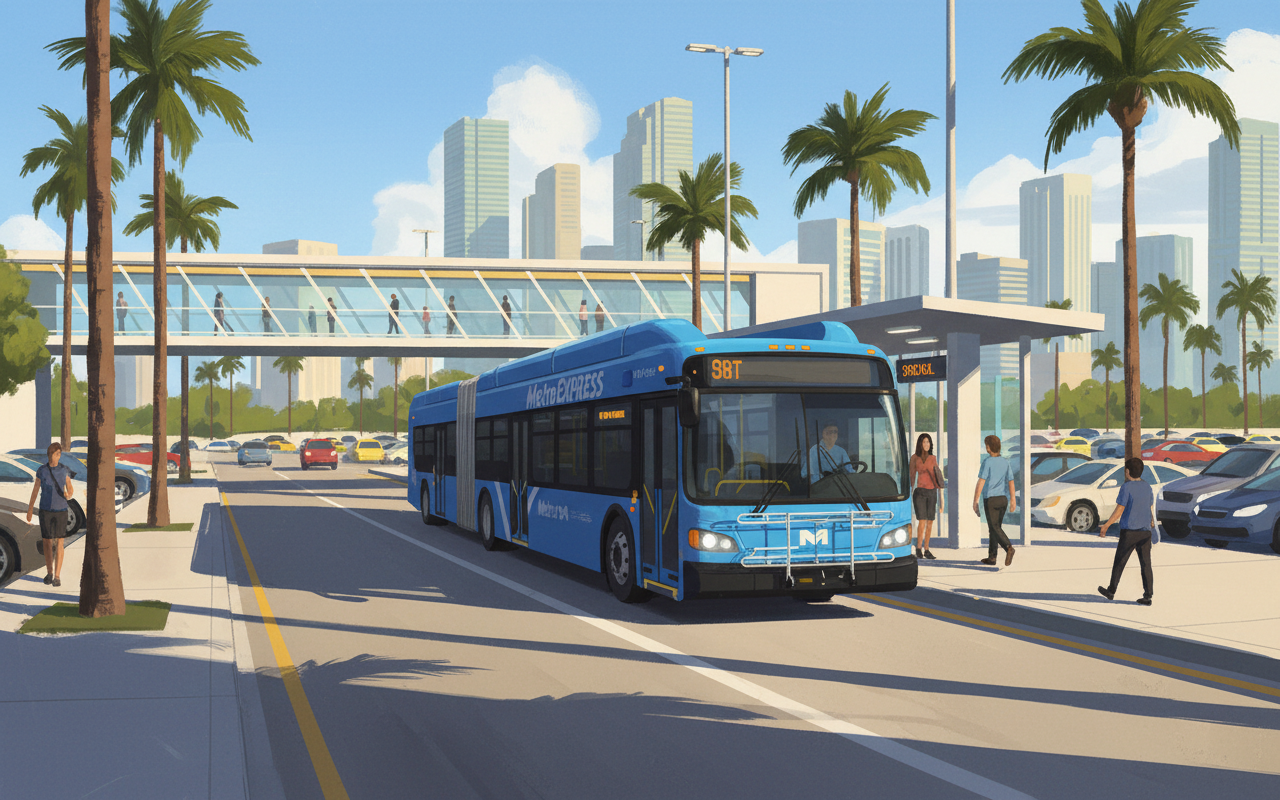
Source: miamitodaynews.com
Miami-Dade’s public transportation is undergoing a systematic evolution, with the MetroExpress Bus Rapid Transit (BRT) system at the forefront of this transformation. As the county actively refines its operational efficiency and expands its reach, residents are witnessing a strategic enhancement of this vital transit artery. This evolution promises not just faster commutes but a more integrated and accessible transportation network for everyone.
Miami-Dade’s commitment to enhancing its public transportation infrastructure is prominently showcased through the ongoing development of the MetroExpress Bus Rapid Transit (BRT) system. This ambitious project, which aims to significantly improve travel times and overall transit efficiency, is currently in a phase of continuous refinement and strategic expansion. The focus is not merely on adding new routes or vehicles, but on meticulously optimizing the existing framework to achieve greater speed, reliability, and passenger convenience.
At the core of these improvements is the enhancement of traffic signal preemption and priority systems. This sophisticated technology is designed to allow MetroExpress buses to communicate with traffic signals, requesting green lights or extended green phases. The goal is to minimize delays at intersections, ensuring that buses maintain their schedule and reduce overall travel times, a crucial factor for any rapid transit system. By minimizing stop-and-go traffic, the BRT can operate more predictably, making it a more attractive alternative to private vehicle use for many commuters.
Beyond signal optimization, the MetroExpress system is experiencing a significant expansion of its physical footprint and operational capabilities. A key development is the addition of park-and-ride facilities. These lots offer commuters a convenient way to drive to a transit station, park their vehicles securely, and then board the MetroExpress bus for the remainder of their journey. This integration of driving and transit is vital for capturing commuters from further afield, those whose origins or destinations might not be directly served by the BRT line itself. These park-and-ride locations are strategically chosen to alleviate traffic congestion in denser areas and provide a seamless transition point for travelers.
Complementing these physical additions is the development of a dedicated operations center. This hub will serve as the nerve center for the entire MetroExpress system, allowing for real-time monitoring, dispatching, and management of the bus fleet. From this central location, transit authorities can respond swiftly to any service disruptions, track vehicle movements, and implement adjustments to schedules as needed. The operational center is essential for maintaining the high level of efficiency and responsiveness that characterizes a successful BRT system, ensuring that services run smoothly and any issues are addressed proactively.
Furthermore, the MetroExpress network is set to be bolstered by the South Dade Intermodal Station Project. This ambitious undertaking aims to create a major transit hub, connecting various modes of transportation, including the MetroExpress BRT, with other transit services like Metrorail and potentially regional bus routes. Intermodal stations are crucial for creating a truly integrated transit network, allowing passengers to transfer effortlessly between different lines and modes of transport. The South Dade project signifies a significant investment in the region’s connectivity, promising to enhance accessibility for a large segment of the county’s population and act as a catalyst for economic development in the surrounding areas.
The overarching strategy behind these continuous improvements is to transform MetroExpress from a functional transit service into a premier transportation option. By focusing on speed, reliability, comfort, and accessibility through enhanced technology, new facilities, and integrated hubs, Miami-Dade is working to build a transit system that can effectively serve its growing population and reduce reliance on single-occupancy vehicles. This multi-faceted approach demonstrates a clear vision for a more sustainable and efficient transportation future for the county.
Why It Matters Locally
The ongoing enhancements to Miami-Dade’s MetroExpress Bus Rapid Transit (BRT) system hold significant importance for the local community, impacting daily commutes, economic vitality, and the overall quality of life. For residents, particularly those in South Dade and surrounding areas, these improvements translate directly into tangible benefits. Faster and more reliable commutes mean less time spent in traffic congestion and more time for family, work, or leisure. The enhanced traffic signal preemption, for instance, aims to shave valuable minutes off travel times, making the BRT a more competitive and attractive option compared to driving, thereby reducing stress and improving punctuality for work and appointments.
The expansion with park-and-ride facilities is a critical step towards broader accessibility. It allows individuals who live further from BRT corridors to still access the system by driving to a convenient, dedicated parking location. This not only makes transit a viable option for a wider demographic but also helps to reduce the number of cars entering more congested urban centers, contributing to cleaner air and less road wear. For neighborhoods around these new facilities, it can spur localized economic activity as commuters utilize nearby services before or after their transit journey.
The development of the operations center signifies a commitment to professional, responsive transit management. This means better coordination of the bus fleet, quicker response times to service issues or emergencies, and more efficient allocation of resources. From a community perspective, this translates to a more dependable service that residents can count on, fostering greater trust and ridership. The South Dade Intermodal Station Project is perhaps the most transformative element, promising to create a central hub that seamlessly connects various transit modes. This intermodal connectivity is a game-changer for regional mobility, making it easier for residents to travel across the county for work, education, or recreation without the need for a personal vehicle. It can enhance access to employment centers, educational institutions, and cultural attractions, thereby boosting economic opportunity and social cohesion.
Collectively, these improvements are integral to Miami-Dade’s vision of a sustainable and equitable transportation network. By investing in and refining its BRT system, the county is working towards reducing its carbon footprint, alleviating traffic congestion, and ensuring that all residents have access to efficient and affordable mobility options. This initiative directly supports community goals of environmental responsibility, economic development, and improved public health through increased physical activity and reduced air pollution. The success of MetroExpress is thus directly tied to the well-being and future prosperity of Miami-Dade.
Our Take
The continuous effort to refine and expand the MetroExpress Bus Rapid Transit (BRT) system reflects a forward-thinking approach to public transportation in Miami-Dade. It’s encouraging to see a commitment to not just building infrastructure, but to meticulously optimizing its performance. The focus on traffic signal preemption and priority, for example, highlights an understanding that speed and reliability are paramount for attracting and retaining riders. This isn’t just about moving buses; it’s about creating a fluid, efficient network that respects passengers’ time.
The strategic additions of park-and-ride facilities and the upcoming South Dade Intermodal Station are particularly noteworthy. They acknowledge the diverse travel patterns and needs of our community. By integrating different modes of transport and providing convenient parking options, MetroExpress is becoming more accessible to a wider range of residents, bridging the gap between suburban life and urban destinations. This approach fosters a more inclusive transit ecosystem, ensuring that more people can benefit from public transportation, regardless of where they live.
Furthermore, the establishment of a dedicated operations center underscores a commitment to operational excellence. A well-managed system is a reliable system, and reliability is the bedrock of public trust in transit. Residents should know that behind the scenes, there’s a dedicated team working to ensure smooth operations, quick responses to issues, and continuous service improvement. This proactive management is crucial for long-term success and for building a transit system that the community can depend on.
Looking ahead, the evolution of MetroExpress is a vital component of Miami-Dade’s broader vision for sustainable growth and enhanced livability. As our county continues to grow, investing in and improving public transit is not just an option, but a necessity. These developments signal a positive trajectory, aiming to create a more connected, less congested, and environmentally conscious community. It’s a collective endeavor where public investment meets community need, paving the way for a more accessible and efficient future for all.
For the full story please visit: miamitodaynews.com