
Source: news.miami.edu
Imagine walking through Overtown’s vibrant streets, not physically, but through the lens of augmented reality, experiencing its rich history and future possibilities firsthand. This isn’t science fiction; it’s the groundbreaking work of University of Miami students who are using cutting-edge XR technology to bring Overtown’s narrative to life. Their innovative projects, recently showcased at a major conference, offer a powerful glimpse into how digital innovation can revitalize and connect communities.
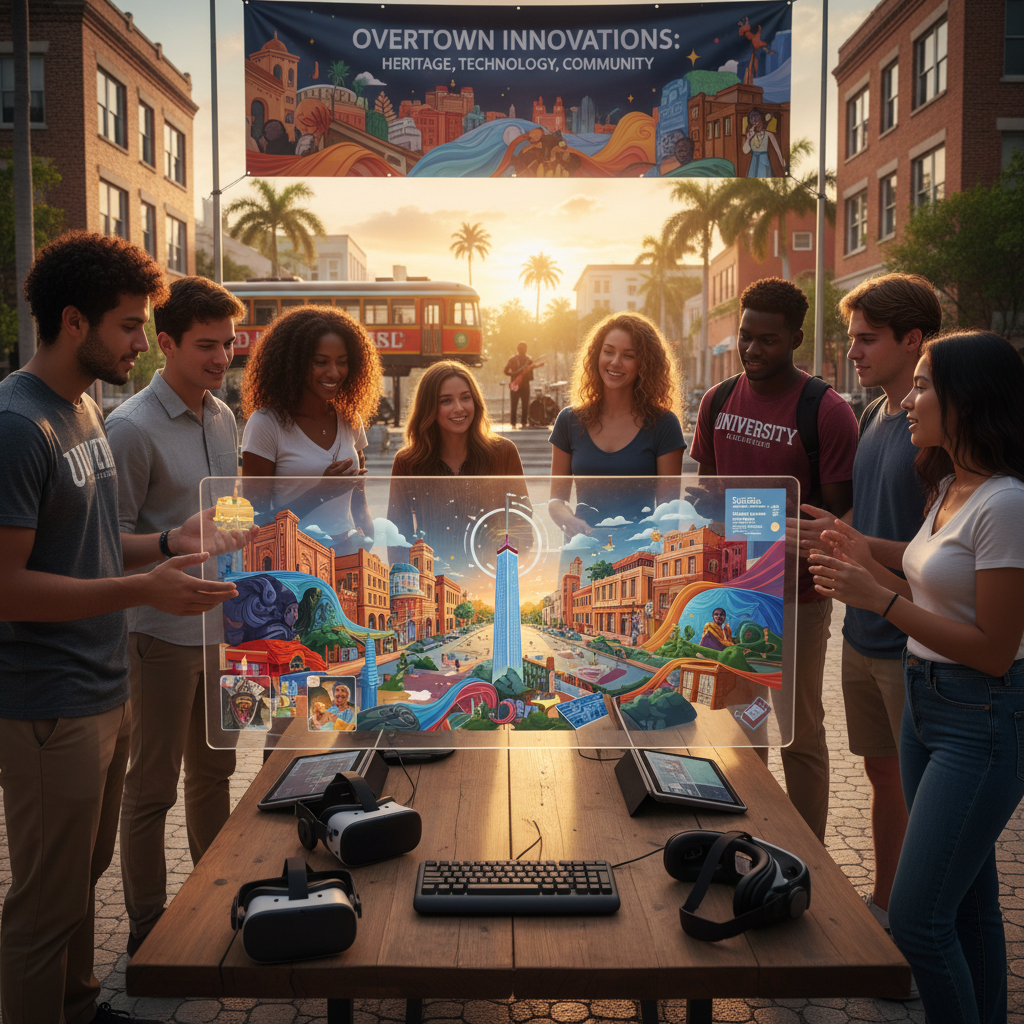
The historic neighborhood of Overtown, a cornerstone of Miami’s cultural identity, is undergoing a digital renaissance, spearheaded by the creative ingenuity of University of Miami students. At a recent XR (Extended Reality) conference, these bright minds presented a suite of immersive applications designed to engage users with Overtown in novel and profound ways. The projects, developed through a collaborative and forward-thinking approach, aim to leverage the power of technology to highlight the neighborhood’s deep historical significance, foster community engagement, and envision its future trajectory.
One of the standout initiatives involved senior Faith Jimenez, whose work allowed her to virtually inhabit Overtown. Her project, as depicted by the University of Miami’s news outlet, wasn’t just a digital representation but a dynamic portal, demonstrating how XR can transport users beyond their immediate surroundings. This immersive storytelling capability is crucial for preserving and sharing the nuanced history of Overtown, a community with a storied past often overlooked in broader narratives. By reconstructing historical moments or envisioning future developments within an interactive digital space, these students are creating powerful educational tools that can resonate with a diverse audience, from long-time residents to curious newcomers.
The development process itself was a testament to interdisciplinary collaboration. Students from various backgrounds, likely including computer science, digital arts, urban planning, and history, pooled their expertise to bring these complex visions to fruition. This collaborative spirit is essential for tackling the multifaceted challenges and opportunities facing urban communities like Overtown. The XR conference served not only as a platform for showcasing their finished projects but also as a hub for disseminating these innovative ideas within a wider technological and community development ecosystem. The act of ‘demoing’ these apps means that potential users, community leaders, and even investors could directly interact with the technology, understanding its capabilities and potential impact in real-time.
The applications developed go beyond passive consumption. They empower users to explore Overtown’s landmarks, understand its cultural heritage through interactive timelines, and even envision potential urban planning scenarios. This could manifest as an AR overlay that, when pointed at a vacant lot, reveals historical archives of what once stood there, or perhaps a VR experience that transports users back to a pivotal moment in Overtown’s civil rights history. The goal is to create a sense of place and connection, bridging the gap between the physical and digital realms to foster a deeper appreciation for the neighborhood.
Furthermore, these student projects underscore a growing trend of utilizing advanced technology for community enrichment. XR, encompassing virtual reality (VR), augmented reality (AR), and mixed reality (MR), offers unparalleled potential for education, cultural preservation, and economic development. By focusing on a specific, historically significant neighborhood like Overtown, the students are demonstrating a practical, community-centric application of technologies that are often perceived as being solely for entertainment or high-tech industries. Their work sets a precedent for how such technologies can be harnessed to tell local stories, preserve heritage, and inspire future generations, making Overtown a living laboratory for digital innovation and community engagement.
Why It Matters Locally
The impact of these student-led XR projects on Overtown is profound and multi-faceted. For a community with such a rich, yet often underrepresented, history, these immersive technologies offer an unprecedented opportunity for cultural preservation and dissemination. By creating virtual tours of historical sites, interactive timelines of significant events, or even digital reconstructions of lost landmarks, students are helping to safeguard Overtown’s legacy for future generations. This is particularly vital in urban environments where physical changes can occur rapidly, potentially eroding the tangible links to the past. The ability to digitally experience Overtown’s heritage can foster a stronger sense of identity and pride among current residents, reconnecting them with their roots and the sacrifices and triumphs of those who came before.
Beyond historical preservation, these projects hold immense potential for community engagement and economic development. Imagine local businesses being featured in interactive AR guides, or prospective residents being able to virtually explore available properties and community amenities. This could attract new interest, investment, and a diverse population, while simultaneously empowering existing entrepreneurs. For educational purposes, these XR applications can serve as powerful tools for local schools, offering students engaging and accessible ways to learn about their own neighborhood’s history and culture, fostering a deeper connection to their community. Moreover, the development itself creates a pipeline of skilled talent – the students involved are gaining invaluable experience in emerging technologies, potentially leading to future career opportunities within the community or inspiring them to launch tech-focused ventures that benefit Overtown. This initiative positions Overtown not just as a place with a past, but as a forward-thinking community embracing the digital age to enhance its present and future.
Our Take
The innovative spirit demonstrated by the University of Miami students in their XR projects for Overtown is truly commendable and offers a beacon of hope for the neighborhood’s future. It’s inspiring to see academic pursuits translate directly into tangible benefits for the community, fostering a powerful symbiosis between education and local development. These initiatives highlight how cutting-edge technology, when applied thoughtfully, can serve as a potent tool for storytelling, cultural preservation, and community empowerment, rather than just being a novelty.
Residents of Overtown should be aware of the incredible potential these digital narratives hold. They represent a new avenue for understanding and celebrating the neighborhood’s unique identity, from its significant historical contributions to its vibrant present. The XR experiences can democratize access to Overtown’s story, making it accessible to a wider audience, including those who may not be able to visit physically, or who learn best through interactive and engaging mediums. This can lead to increased appreciation, cultural tourism, and economic opportunities, all while ensuring the authentic narrative of Overtown is told.
Looking ahead, this project sets a compelling precedent. It underscores the importance of investment in digital literacy and infrastructure within historically significant communities. The success of these student-led efforts should encourage further collaborations between academic institutions, community organizations, and tech developers. The future of Overtown, illuminated by these immersive digital visions, appears bright, blending its rich heritage with the limitless possibilities of the digital frontier, demonstrating that innovation and preservation can indeed go hand-in-hand. This is not just about technology; it’s about using every available tool to build a stronger, more connected, and more vibrant Overtown for everyone.
For the full story please visit: news.miami.edu